
If you’ve scrolled social media lately, you may have seen people talking about a new experimental drug called Retatrutide—the one some describe as “the next Ozempic.” It’s not available for prescription, not approved by the FDA, and not sold online (no matter what some websites claim). But in early studies, it’s made researchers sit up and take notice.
So what is Retatrutide—and why is everyone watching it so closely?
What Is Retatrutide, Exactly?
Retatrutide (pronounced reh‑TA‑troo‑tide) is being studied as a possible new medication to help people lose weight and improve blood‑sugar control. It’s made by the same company that created Mounjaro and Zepbound, diabetes and weight‑loss drugs that became household names in 2023.
Here’s the catch: Retatrutide is still in the research phase. No one outside an official clinical trial should be using it. It’s called a research peptide, meaning scientists are still studying how it works, how safe it is, and whether it should ever become a prescription medication.
The Science—Made Simple
Your body makes natural hormones that help control appetite and blood sugar after you eat. Some of the newer weight‑loss drugs mimic these hormones to help people feel full faster and eat less.
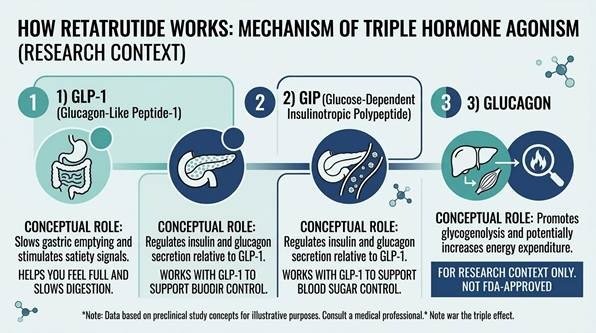
Think of it as turning on three “metabolism switches” at the same time instead of one. That’s what makes Retatrutide different from other medicines like semaglutide (Ozempic or Wegovy) and tirzepatide (Mounjaro or Zepbound).
How Does It Compare to Ozempic or Mounjaro?
Here’s a simple side‑by‑side view based on research studies:
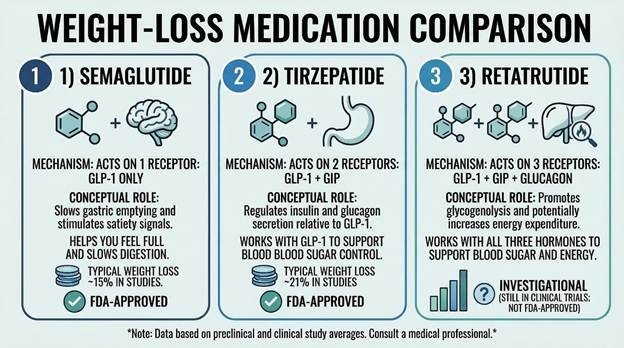
Important: These results come from different studies with different people—it’s not a head‑to‑head comparison.
What Did the Study Show?
In a 2023 clinical trial published in The New England Journal of Medicine, adults who took Retatrutide for almost a year lost, on average, about a quarter of their body weight. That’s the strongest result reported so far for any obesity drug in similar time frames.
Researchers also saw improvements in cholesterol, insulin, and blood sugar levels. But remember, this is still early science. Long‑term safety studies are just beginning.
Safety and Side Effects
Common side effects so far look similar to Ozempic and Mounjaro:
- Nausea
- Vomiting
- Diarrhea or constipation
Since Retatrutide also affects the “glucagon” part of metabolism, researchers are watching for things like small increases in heart rate or changes in liver enzymes. So far, these have not been serious, but larger studies will reveal more.
How Do Researchers Study It?
In clinical studies, doctors start participants at a very low dose and gradually increase it every few weeks. This slow approach helps people’s bodies adjust and reduces stomach‑related side effects.
Doses in the main trial ranged from 1 mg up to 12 mg, given by weekly injections—just like other similar drugs. But again, this dosing is for research only, not public use.
The Road Ahead
Retatrutide is moving into larger, later‑stage (“Phase 3”) trials. These will test thousands of volunteers for longer periods to confirm:
- Whether the results hold up over time
- How safe it is for the heart and liver
- How it compares directly to existing drugs
Even if everything goes well, it could take several years before Retatrutide is reviewed by regulators like the U.S. Food and Drug Administration (FDA).
Why All the Excitement?
Obesity is one of the biggest health challenges worldwide, tied to diabetes, heart disease, and many other conditions. The success of newer drugs like Wegovy and Mounjaro has shown that targeting these natural hunger hormones can lead to major improvements.
If Retatrutide’s early promise holds up, it could become an even more effective tool—though not a magic fix. Doctors emphasize that medications support healthy habits, not replace them.
Quick Answers
Can I buy Retatrutide online?
No. Any product being sold online or in clinics is not legitimate or approved.
Is it stronger than Ozempic?
Possibly, but that depends on future studies.
Is it safe?
So far, it seems similar to other drugs in its class, but only long‑term trials will tell.
When might it be available?
If clinical trials are successful, it could still take several years to reach pharmacies—and that’s if it’s approved.
Study Reference
| Study | Year | Type | Key Findings | Source |
| NEJM Phase 2 Trial of Retatrutide | 2023 | Randomized, double‑blind, placebo‑controlled | Up to 24% average weight loss at 48 weeks in adults without diabetes | New England Journal of Medicine (Jastreboff et al.) |
Bottom Line
Retatrutide may represent the next step in weight‑loss medicine—a triple‑action approach that targets appetite, metabolism, and energy use. But for now, it’s still firmly in the lab, not the clinic.
If you’re curious about weight‑management options, talk to a licensed healthcare provider. They can explain which FDA‑approved medications are safe and appropriate today.
Important Disclaimer
This article is for general educational purposes only. It does not provide medical advice, diagnosis, or treatment. Retatrutide is an experimental medication currently being studied and is not approved by the FDA or any regulatory body. Always talk with a qualified healthcare professional before making health‑related decisions.